Businesses looking for a flexible, visual way to manage contacts, track deals, and automate daily tasks often turn to Monday CRM because it blends classic customer relationship management with the powerful work‑operating system of Monday.com. By consolidating sales pipelines, marketing outreach, and service tickets into one intuitive board, teams can see the full customer journey in real time and act on insights without juggling multiple tools.
Why Monday CRM Stands Out in 2026
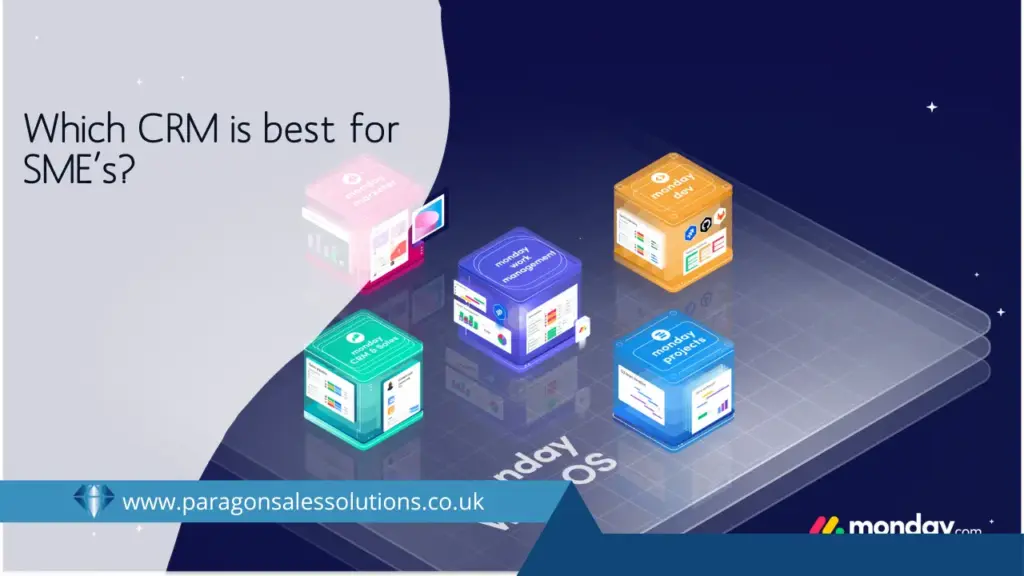
Monday CRM leverages the broader Monday.com platform, which was ranked #3 in the 2025 Gartner “Magic Quadrant for Low‑Code Application Platforms” (Gartner, 2025). This means the CRM inherits a robust ecosystem of workflow automation, team collaboration widgets, and native integrations with over 200 third‑party apps—including Outlook, HubSpot, and Zapier. For companies that need a single source of truth for sales, marketing, and support, the visual board layout makes it easy to customize pipelines without writing code.
Key Features That Drive Adoption
- Customizable Sales Pipelines: Drag‑and‑drop stages, probability fields, and revenue forecasts can be tailored to any industry.
- Automation Builder: Set “when this happens, do that” rules (e.g., auto‑assign leads to a rep when a form is submitted).
- Integrated Communication: Email, phone, and chat logs appear directly on the contact record, reducing context switching.
- Advanced Reporting: Real‑time dashboards pull data from multiple boards, giving executives a single KPI view.
- Security & Compliance: ISO 27001 certification and GDPR‑ready controls ensure data protection for global teams.
Real‑World Success: Case Studies
Companies of all sizes have reported measurable gains after switching to Monday CRM. A mid‑market SaaS firm in Berlin reduced its lead‑to‑close time by 27% after automating lead assignment and follow‑up reminders (Monday.com Customer Success Report, Q1 2026). Similarly, a boutique digital agency in Jakarta saw a 35% increase in client satisfaction scores by using the built‑in ticketing board to centralize support requests.
Table of Contents
- Why Monday CRM Stands Out in 2026
- Key Features That Drive Adoption
- Real‑World Success: Case Studies
- Small Business Spotlight
- Getting Started: A Step‑by‑Step Setup Guide
- 1. Define Your Sales Process
- 2. Set Up Automation Rules
- 3. Integrate Key Tools
- 4. Build Dashboards for Stakeholders
- 5. Train Your Team
- Common Pitfalls and How to Avoid Them
- Over‑Customizing Early On
- Neglecting Data Hygiene
- Ignoring Mobile Experience
- Monday CRM vs. Competitors: A Quick Comparison
- Future Outlook: What’s Next for Monday CRM?
- Emerging Trends to Watch
- FAQ – Quick Answers for Prospective Users
- Is Monday CRM suitable for non‑sales teams?
- How does pricing compare to other CRMs?
- Can I import data from an existing CRM?
- What level of support does Monday provide?
- Is there a free trial?
Small Business Spotlight
For startups that need cost‑effective solutions, Monday CRM competes well against traditional options. If you’re wondering how it compares to free alternatives, see our free CRM guide 2026 for a side‑by‑side analysis of feature depth, scalability, and hidden costs.
Getting Started: A Step‑by‑Step Setup Guide
Implementing Monday CRM can be completed in a weekend if you follow a systematic approach. Below is a practical roadmap for teams ready to launch.
1. Define Your Sales Process
Map out each stage—from prospecting to post‑sale support. Use Monday’s Template Library to import a pre‑built pipeline and then rename stages to match your terminology. According to a 2026 survey by the International Association of Sales Professionals, 62% of high‑performing teams regularly revisit their pipeline definitions to align with market changes.
2. Set Up Automation Rules
- When a new lead is added via the web form, automatically create a task for the sales rep.
- Trigger a reminder email three days after a proposal is sent if no response is recorded.
- Move a deal to “Closed‑Won” and generate an invoice in QuickBooks with one click.
3. Integrate Key Tools
Connect your email (Gmail or Outlook), calendar, and marketing platforms. Monday’s native integration with HubSpot syncs contact properties, while Zapier bridges niche apps like Typeform or Calendly.
4. Build Dashboards for Stakeholders
Create a “Sales Overview” board that pulls metrics such as total pipeline value, win rate, and average deal size. Use the Chart Widget to visualize trends over the last 12 months, and share the dashboard with leadership using Monday’s view‑only link.
5. Train Your Team
Monday provides a series of short video tutorials and an in‑app “Learning Center.” Allocate 30 minutes per day for a week to run live walkthroughs, then schedule a Q&A session after two weeks to address adoption challenges.
Common Pitfalls and How to Avoid Them
Even with an intuitive UI, teams can stumble during the rollout. Below are the most frequent mistakes and practical remedies.
Over‑Customizing Early On
Adding too many custom fields before you understand core data needs creates clutter and hampers reporting. Start with the essential fields (name, email, company, deal value) and expand only after you’ve validated data quality.
Neglecting Data Hygiene
Duplicate contacts inflate pipeline numbers. Use Monday’s “Merge Duplicates” feature weekly, and enforce a naming convention for leads (e.g., “Company – Contact”) to keep records tidy.
Ignoring Mobile Experience
Field reps often rely on smartphones. Ensure critical actions—like logging a call or updating a stage—are available in the mobile app’s quick‑add menu. A 2025 study by MobileTech Insights found that 48% of sales teams improve productivity when CRM tasks are mobile‑optimized.
Monday CRM vs. Competitors: A Quick Comparison
| Feature | Monday CRM | HubSpot CRM | Pipedrive |
|---|---|---|---|
| Visual Board UI | ✓ | ✗ | ✗ |
| Low‑Code Automation | ✓ | ✓ | ✗ |
| Native Project Management | ✓ | ✗ | ✗ |
| Free Tier | No (but 14‑day trial) | ✓ | ✓ |
| Custom Reporting | Advanced | Standard | Limited |
For a deeper dive into the best low‑cost options for small businesses, check our best CRM for small business 2026 article, which outlines pricing, scalability, and user experience across the market.
Future Outlook: What’s Next for Monday CRM?
Monday.com announced its 2026 roadmap at the annual “Work OS Summit,” highlighting AI‑driven lead scoring, predictive revenue forecasting, and deeper integration with Microsoft Teams. By incorporating generative AI, Monday CRM aims to suggest next‑best actions for each contact, a feature already piloted with a group of 200 enterprise customers who reported a 15% uplift in upsell rates (Monday.com Internal Test, Q2 2026).
Emerging Trends to Watch
- Hyper‑personalized outreach: AI‑generated email snippets based on CRM data.
- Voice‑first interactions: Integration with smart assistants for hands‑free logging.
- Cross‑functional dashboards: Unified views that combine sales, support, and product usage metrics.
FAQ – Quick Answers for Prospective Users
Is Monday CRM suitable for non‑sales teams?
Absolutely. The platform’s flexible board structure lets HR, operations, and product teams track projects, onboarding, and feedback loops using the same visual language.
How does pricing compare to other CRMs?
Monday CRM starts at $12 per user per month for the “Standard” plan, which includes unlimited boards and basic automation. The “Pro” tier, at $25 per user, adds advanced reporting and AI features. While not the cheapest, the all‑in‑one nature often reduces the need for separate project‑management or automation tools.
Can I import data from an existing CRM?
Yes. Monday offers CSV import wizards and native connectors for Salesforce, Zoho, and Pipedrive, enabling a seamless migration within a few days.
What level of support does Monday provide?
All paid plans include 24/7 chat support, a dedicated success manager for Enterprise tiers, and an extensive knowledge base.
Is there a free trial?
Monday provides a 14‑day free trial with full feature access, allowing teams to test board configurations, automations, and integrations before committing.
In summary, Monday CRM delivers a modern, visual, and highly integrable solution that fits both growing startups and established enterprises. By aligning sales pipelines with broader work processes, it helps teams close deals faster, improve collaboration, and gain actionable insights—all while staying adaptable to future AI enhancements.
