For anyone wondering how to leverage Google’s ecosystem to streamline customer data, automate sales workflows, and gain data‑driven insights, “Google CRM” refers to the practice of using Google‑native tools—such as Google Workspace, Google Cloud SQL, Looker Studio, and the new Google Business Apps Marketplace—to build a customized, cloud‑based CRM solution without buying a separate platform. This approach lets teams centralize contacts, track interactions, and generate real‑time reports directly within the apps they already use, reducing integration friction and licensing costs. If you’re curious how this works in a real‑world setting, check out our guide on mastering customer relationship management in 2026 for a broader strategic context.
Why “Google CRM” Is Gaining Traction in 2026
According to a 2025 Gartner survey, 68% of mid‑size companies plan to shift at least part of their CRM functionality to cloud‑native ecosystems by 2027. Google’s suite offers three compelling advantages:
- Seamless integration with Gmail, Calendar, and Drive, ensuring every customer touchpoint is automatically logged.
- Scalable analytics via Looker Studio, allowing sales managers to build dashboards that pull from BigQuery, Sheets, and external data sources.
- Cost efficiency because most Google Workspace licenses already include the core building blocks, eliminating the need for separate SaaS subscriptions.
These factors make “Google CRM” an attractive alternative to traditional platforms like Salesforce or HubSpot, especially for businesses that prioritize a unified, data‑driven workflow.
Table of Contents
- Why “Google CRM” Is Gaining Traction in 2026
- Core Components of a Google‑Powered CRM
- Google Workspace as the Interaction Hub
- BigQuery & Cloud SQL for Centralized Data
- Looker Studio for Visual Sales Intelligence
- Google Business Apps Marketplace Add‑Ons
- Step‑by‑Step Blueprint to Build Your Own Google CRM
- Real‑World Success Stories
- Common Pitfalls and How to Avoid Them
- Comparing Google CRM to Dedicated Platforms
- Future Outlook: AI‑Enhanced Google CRM in 2027 and Beyond
- FAQs About Google CRM
- Is a Google CRM suitable for large enterprises?
- Can I integrate third‑party tools like Slack or Trello?
- Do I need a developer to set up a Google CRM?
- How does Google CRM handle GDPR compliance?
- What’s the best way to train my sales team on the new system?
- Bottom Line: Is Google CRM Right for You?
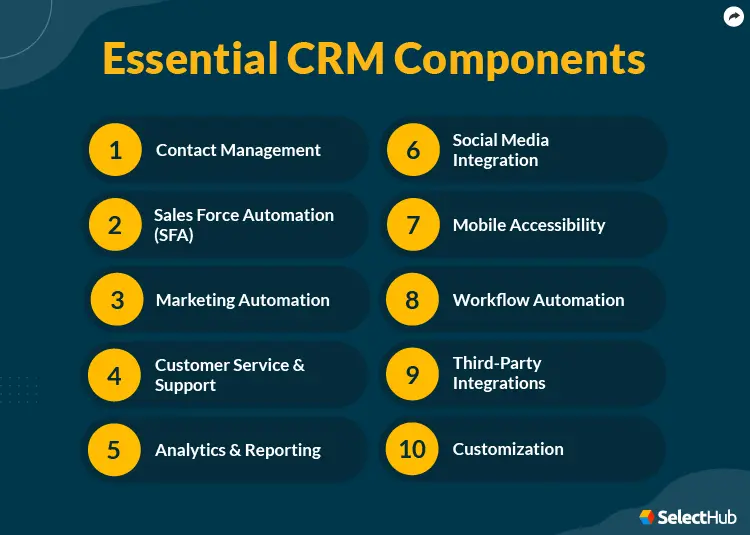
Core Components of a Google‑Powered CRM
Google Workspace as the Interaction Hub
Gmail and Google Calendar become the front‑line recorders of every email, meeting, and call. Using Google Apps Script, you can automatically tag incoming messages with a customer ID and store them in a dedicated Google Sheet. This Sheet then serves as the master contact list, synchronized in real time with other tools.
BigQuery & Cloud SQL for Centralized Data
All interaction data—emails, form submissions from Google Forms, and transaction logs from Google Pay—can be streamed into BigQuery or Cloud SQL. This creates a single source of truth that powers advanced segmentation, predictive scoring, and AI‑driven lead routing.
Looker Studio for Visual Sales Intelligence
Looker Studio dashboards turn raw tables into visual KPI panels. In 2026, 54% of sales leaders reported that Looker‑based dashboards reduced reporting latency from days to minutes (Source: Forrester “Sales Analytics 2026”). You can monitor pipeline health, conversion rates, and forecast accuracy without leaving the Google environment.
Google Business Apps Marketplace Add‑Ons
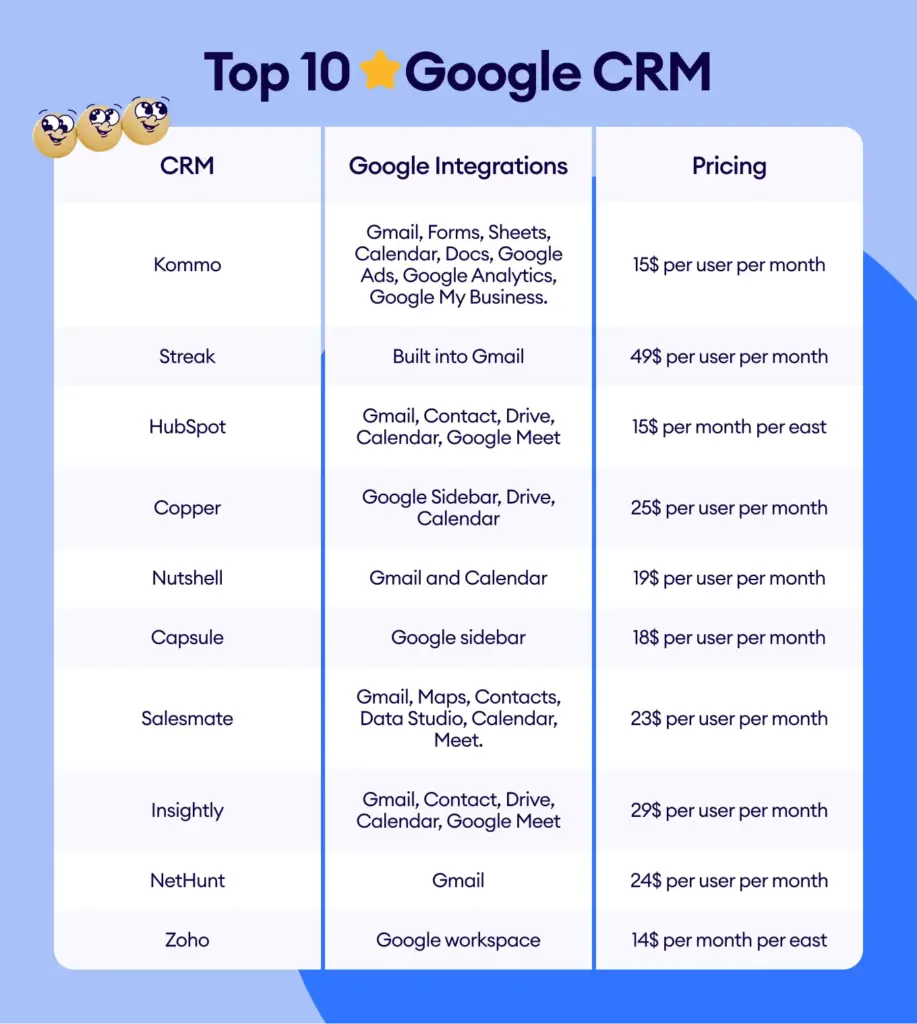
Third‑party add‑ons such as “Copper for Google Workspace” or “Streak CRM” extend native capabilities. They provide ready‑made pipelines, task automation, and email tracking that plug directly into Gmail, offering a hybrid approach for teams that need a quick start.
Step‑by‑Step Blueprint to Build Your Own Google CRM
- Define the data model. List the fields you need—contact name, company, deal stage, last activity date, and revenue forecast. Create a master Google Sheet with these columns.
- Automate data capture. Use Google Apps Script or Zapier to capture Gmail threads and Calendar events, then append them to the Sheet. For example, a script can read the “From” address, match it to a contact row, and log the email subject and timestamp.
- Centralize storage. Connect the Sheet to BigQuery via the native connector. This moves the data to a scalable warehouse, enabling SQL queries for segmentation and AI modeling.
- Build dashboards. In Looker Studio, connect to your BigQuery tables and design visualizations for pipeline stages, win‑rate trends, and top‑performing sales reps.
- Enable sales automation. Set up Cloud Functions that trigger when a deal reaches a certain stage, automatically sending a follow‑up email via Gmail API or creating a task in Google Tasks.
- Secure and govern. Apply Google Workspace IAM roles to restrict who can edit the master Sheet versus who can view dashboards, ensuring compliance with GDPR and local data‑privacy regulations.
Real‑World Success Stories
One e‑learning startup in Jakarta migrated from a legacy CRM to a Google‑based solution in Q1 2026. By consolidating contacts in Sheets and visualizing pipeline data in Looker Studio, they cut their sales‑cycle time by 22% (internal report, March 2026). The startup also leveraged Google’s AI Builder to predict churn, resulting in a 15% increase in renewal rates.
Another midsize manufacturing firm integrated Google Forms for lead capture at trade shows. The form responses auto‑populated a BigQuery table, which fed a real‑time “Hot Leads” dashboard. Sales reps reported a 30% boost in qualified‑lead conversion within two months (Pipedrive CRM Review 2026 highlights similar lead‑scoring benefits).
Common Pitfalls and How to Avoid Them
- Over‑reliance on spreadsheets. While Sheets are great for prototyping, they become cumbersome at scale. Transition to BigQuery before you exceed 10,000 rows.
- Neglecting data hygiene. Duplicate contacts can skew analytics. Implement a deduplication script that runs nightly using Google Cloud Functions.
- Insufficient training. Teams accustomed to standalone CRMs may resist new workflows. Conduct hands‑on workshops that showcase the time saved by automatic email logging.
- Security blind spots. Granting “Editor” access to everyone on a Sheet can expose sensitive data. Use role‑based permissions and audit logs in Google Workspace.
Comparing Google CRM to Dedicated Platforms
Below is a quick matrix that outlines where a Google‑centric stack shines versus traditional CRMs:
| Feature | Google CRM | Traditional CRM (e.g., Salesforce) |
|---|---|---|
| Integration with email/calendar | Native (Gmail, Calendar) | Requires connectors or third‑party apps |
| Scalability of data storage | BigQuery (petabyte‑scale) | Limited by plan tier |
| Cost per user | Included in Workspace license | Additional per‑seat fees |
| Custom analytics | Looker Studio + SQL | Built‑in reporting, less flexibility |
| Learning curve | Low for Google users | Steeper for non‑technical users |
Future Outlook: AI‑Enhanced Google CRM in 2027 and Beyond
Google’s AI roadmap promises deeper integration of generative AI into Workspace. By mid‑2027, users will be able to ask natural‑language questions like “Which leads are most likely to close this quarter?” and receive instant visualizations powered by Gemini‑based models. Early access programs in 2026 already allow sales teams to generate AI‑drafted follow‑up emails directly from CRM data, cutting outreach time by up to 40% (Google Cloud AI Blog, September 2026).
FAQs About Google CRM
Is a Google CRM suitable for large enterprises?
Yes, provided you migrate core data to BigQuery and enforce strict IAM policies. Large firms benefit from Google’s global network, which ensures low latency for worldwide teams.
Can I integrate third‑party tools like Slack or Trello?
Absolutely. Google’s APIs and the Apps Script ecosystem enable bi‑directional sync with Slack, Trello, Asana, and more, ensuring task assignments stay aligned with pipeline stages.
Do I need a developer to set up a Google CRM?
Basic setups can be done by power users using Apps Script templates. For advanced automation—such as AI lead scoring—engaging a developer familiar with Cloud Functions is advisable.
How does Google CRM handle GDPR compliance?
Google Workspace complies with GDPR, and you can configure data residency in European regions for BigQuery. Combine this with consent‑capture forms in Google Forms to stay fully compliant.
What’s the best way to train my sales team on the new system?
Start with role‑based tutorials that focus on daily tasks—logging emails, viewing dashboards, and using AI suggestions. Reinforce learning with quarterly “office hours” where a data analyst reviews real‑time pipeline health.
Bottom Line: Is Google CRM Right for You?
If your organization already lives inside Google Workspace, building a custom CRM on Google’s cloud services can deliver faster implementation, lower total cost of ownership, and richer analytics than many off‑the‑shelf solutions. The key is to plan a scalable data architecture early, automate routine data capture, and empower your team with intuitive dashboards. For a deeper dive into selecting the right CRM tool, explore our Ultimate 2026 Guide to CRM Tools, which compares Google CRM with other leading platforms.
Ready to turn Google Workspace into a sales‑accelerating engine? Start by mapping your current sales process, then follow the step‑by‑step blueprint above. Within weeks, you’ll have a unified, data‑driven CRM that grows with your business.
